
AlgoViz

Papers, explained

Read the idea. See the trade-offs. Explain it back. Open the original.

Distributed systems foundations

  • Time, Clocks, and the Ordering of Events in a Distributed SystemMust know · Explained page coming soon
  • Impossibility of Distributed Consensus with One Faulty Process (FLP)Good to know · Explained page coming soon
  • Linearizability: A Correctness Condition for Concurrent ObjectsGood to know · Explained page coming soon
  • Paxos Made SimpleGood to know · Explained page coming soon
  • Brewer's Conjecture and the Feasibility of Consistent, Available, Partition-Tolerant Web Services (CAP proof)Must know · Explained page coming soon
  • In Search of an Understandable Consensus Algorithm (Raft)Must know · Explained page coming soon
  • Chain Replication for Supporting High Throughput and AvailabilityDeep cut · Explained page coming soon

Storage and databases

  • The Log-Structured Merge-Tree (LSM-Tree)Good to know · Explained page coming soon
  • Consistent Hashing and Random TreesMust know · Explained page coming soon
  • Bigtable: A Distributed Storage System for Structured DataMust know · Explained page coming soon
  • Dynamo: Amazon's Highly Available Key-value StoreMust know · Read the explained page
  • Spanner: Google's Globally-Distributed DatabaseMust know · Explained page coming soon
  • Amazon Aurora: Design Considerations for High Throughput Cloud-Native Relational DatabasesGood to know · Explained page coming soon
  • Dremel: Interactive Analysis of Web-Scale DatasetsDeep cut · Explained page coming soon

Large-scale infrastructure and data processing

  • The Google File SystemMust know · Explained page coming soon
  • MapReduce: Simplified Data Processing on Large ClustersMust know · Explained page coming soon
  • The Chubby Lock Service for Loosely-Coupled Distributed SystemsGood to know · Explained page coming soon
  • ZooKeeper: Wait-free Coordination for Internet-scale SystemsGood to know · Explained page coming soon
  • Kafka: a Distributed Messaging System for Log ProcessingMust know · Explained page coming soon
  • The Dataflow ModelGood to know · Explained page coming soon
  • Scaling Memcache at FacebookMust know · Explained page coming soon
  • TAO: Facebook's Distributed Data Store for the Social GraphGood to know · Explained page coming soon
  • Large-scale Cluster Management at Google with BorgGood to know · Explained page coming soon
  • Zanzibar: Google's Consistent, Global Authorization SystemGood to know · Explained page coming soon

Production engineering and reliability

  • The Tail at ScaleMust know · Explained page coming soon
  • Dapper, a Large-Scale Distributed Systems Tracing InfrastructureGood to know · Explained page coming soon
  • Metastable Failures in Distributed SystemsGood to know · Explained page coming soon

Deep learning foundations

LLM training and scaling

  • Language Models are Few-Shot Learners (GPT-3)Must know · Explained page coming soon
  • Scaling Laws for Neural Language ModelsGood to know · Explained page coming soon
  • Training Compute-Optimal Large Language Models (Chinchilla)Must know · Explained page coming soon
  • ZeRO: Memory Optimizations Toward Training Trillion Parameter ModelsGood to know · Explained page coming soon
  • Outrageously Large Neural Networks: The Sparsely-Gated Mixture-of-Experts LayerGood to know · Explained page coming soon
  • LoRA: Low-Rank Adaptation of Large Language ModelsMust know · Explained page coming soon
  • The Llama 3 Herd of ModelsDeep cut · Explained page coming soon
  • DeepSeek-V3 Technical ReportGood to know · Explained page coming soon

Alignment and reasoning

  • Training language models to follow instructions with human feedback (InstructGPT)Must know · Explained page coming soon
  • Direct Preference Optimization: Your Language Model is Secretly a Reward ModelMust know · Explained page coming soon
  • Chain-of-Thought Prompting Elicits Reasoning in Large Language ModelsMust know · Explained page coming soon
  • DeepSeekMath (introduces GRPO)Good to know · Explained page coming soon
  • DeepSeek-R1: Incentivizing Reasoning Capability in LLMs via Reinforcement LearningMust know · Explained page coming soon
  • Scaling LLM Test-Time Compute Optimally can be More Effective than Scaling Model ParametersGood to know · Explained page coming soon
  • Does Reinforcement Learning Really Incentivize Reasoning Capacity in LLMs Beyond the Base Model?Deep cut · Explained page coming soon

LLM inference and serving

  • FlashAttention: Fast and Memory-Efficient Exact Attention with IO-AwarenessMust know · Explained page coming soon
  • Fast Transformer Decoding: One Write-Head is All You Need (MQA)** plus **GQAGood to know · Explained page coming soon
  • Efficient Memory Management for Large Language Model Serving with PagedAttention (vLLM)Must know · Explained page coming soon
  • Orca: A Distributed Serving System for Transformer-Based Generative ModelsGood to know · Explained page coming soon
  • Fast Inference from Transformers via Speculative DecodingMust know · Explained page coming soon
  • DistServe: Disaggregating Prefill and DecodingGood to know · Explained page coming soon

Retrieval and agents

  • Efficient and robust approximate nearest neighbor search using HNSW graphsGood to know · Explained page coming soon
  • Dense Passage Retrieval for Open-Domain Question Answering (DPR)Good to know · Explained page coming soon
  • Retrieval-Augmented Generation for Knowledge-Intensive NLP Tasks (RAG)Must know · Explained page coming soon
  • Lost in the Middle: How Language Models Use Long ContextsGood to know · Explained page coming soon
  • ReAct: Synergizing Reasoning and Acting in Language ModelsMust know · Explained page coming soon
  • Toolformer: Language Models Can Teach Themselves to Use ToolsGood to know · Explained page coming soon
  • SWE-bench: Can Language Models Resolve Real-World GitHub Issues?Good to know · Explained page coming soon
  • From Local to Global: A Graph RAG Approach to Query-Focused Summarization (GraphRAG)Deep cut · Explained page coming soon

Five AI papers in brief

  • Architecture

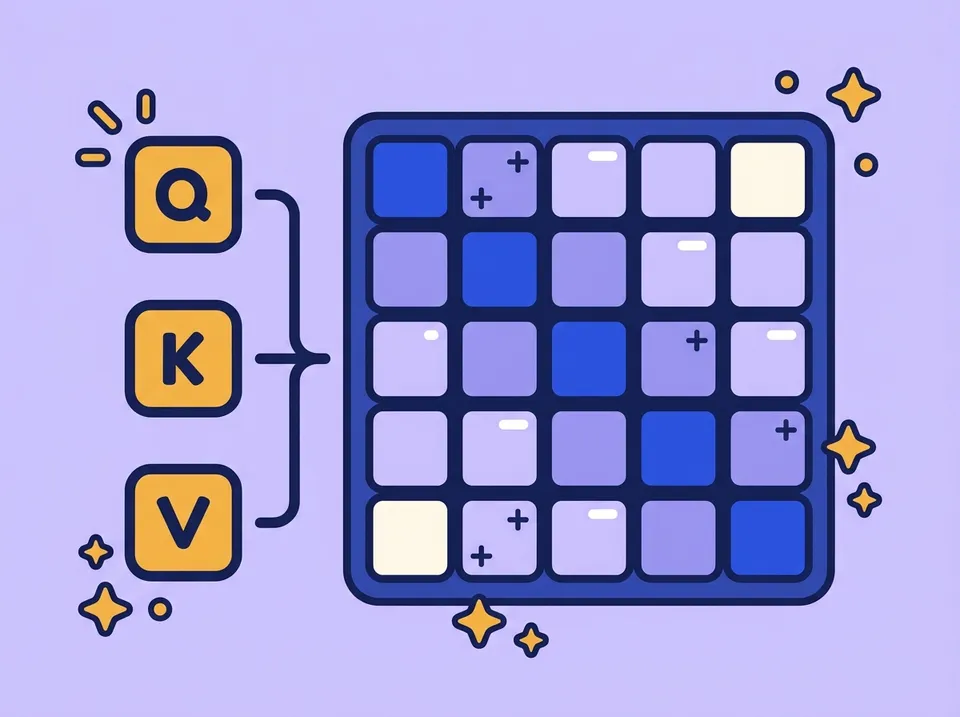
    Attention Is All You Need

    Vaswani et al. · 2017

    Introduces the Transformer, a sequence model built only from attention layers, with no recurrence or convolution.
    Focus onEvery LLM you'll be asked about descends from this design.
    Original paper
  • Retrieval

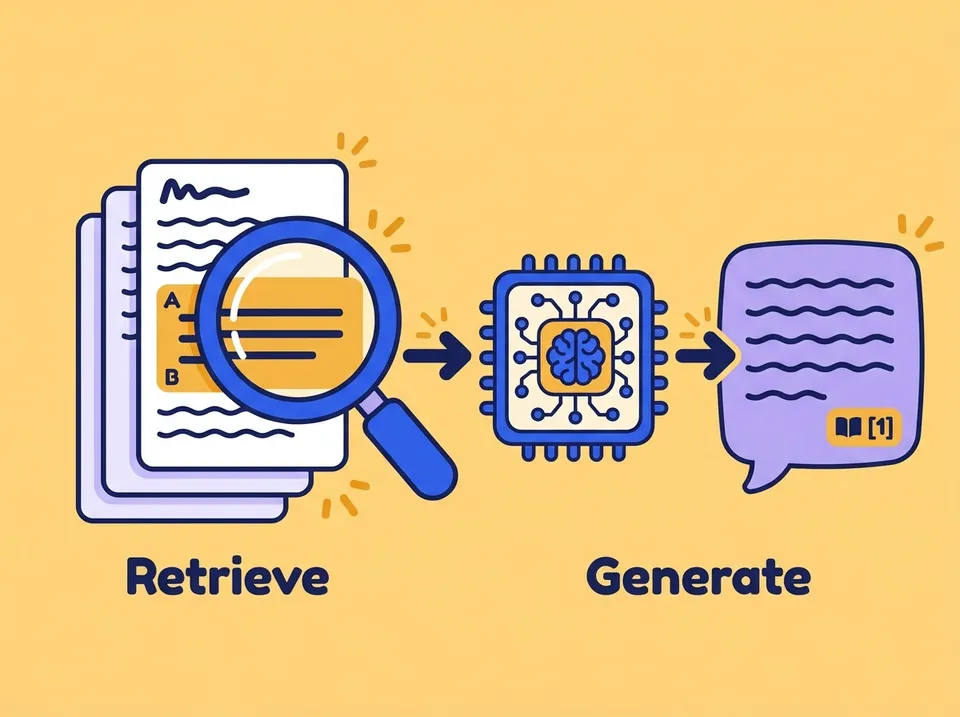
    Retrieval-Augmented Generation for Knowledge-Intensive NLP Tasks

    Lewis et al. · 2020

    Pairs a text generator with a dense retriever over a large document index, so the model reads relevant passages before it answers.
    Focus onRAG is the default answer to “how do you give an LLM private or fresh knowledge?”.
    Original paper
  • Prompting

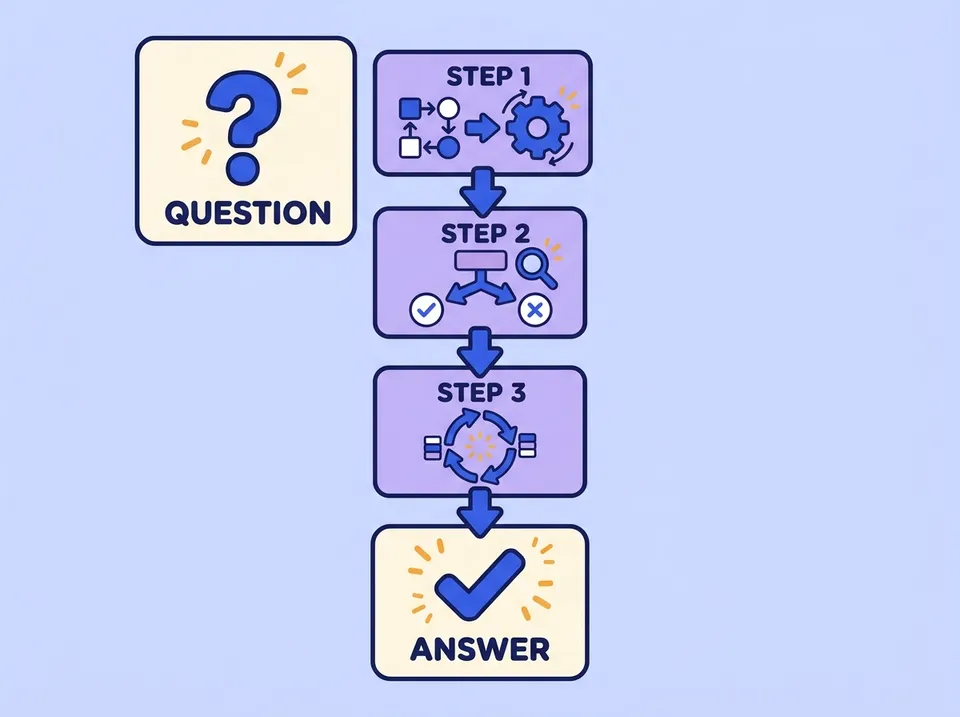
    Chain-of-Thought Prompting Elicits Reasoning in Large Language Models

    Wei et al. · 2022

    Shows that adding a few worked examples with written-out intermediate steps to a prompt makes large models much better at multi-step problems.
    Focus onIt's the root of “let the model think before it answers”, which today's reasoning models build in.
    Original paper
  • Agents

    ReAct: Synergizing Reasoning and Acting in Language Models

    Yao et al. · 2022

    Has the model alternate between a written thought, an action such as a search or API call, and the observation that comes back.
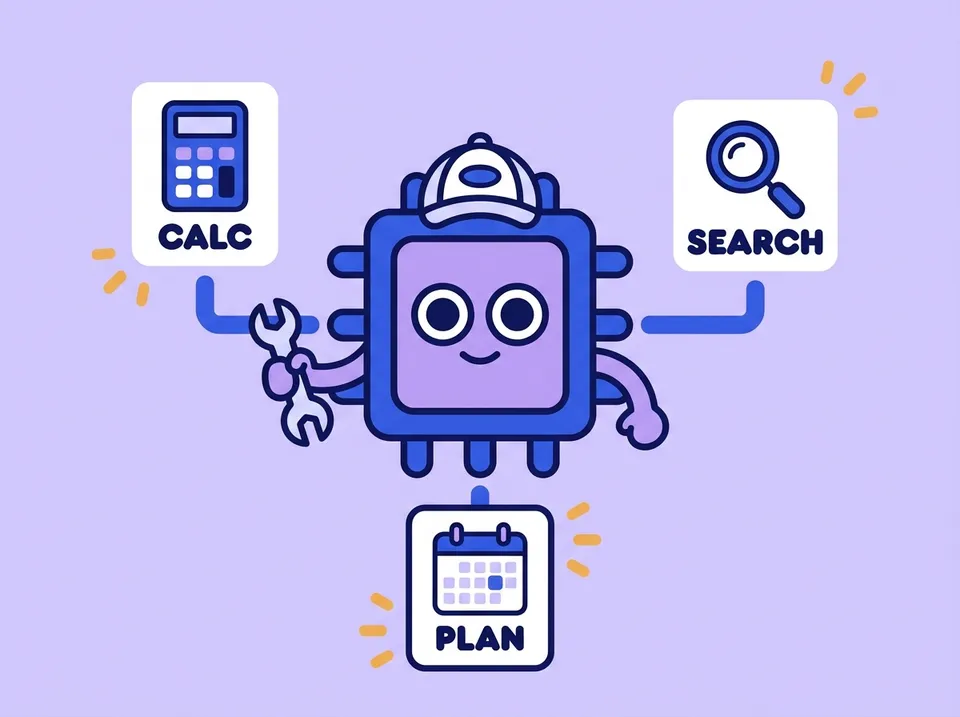
    Focus onThis thought → action → observation loop is the skeleton of most agent frameworks.
    Original paper
  • Tool use

    Toolformer: Language Models Can Teach Themselves to Use Tools

    Schick et al. · 2023

    Trains a model to decide on its own when to call external tools such as a calculator, a search engine, a translator or a calendar.

    Focus onIt explains why models are good at function calling: tool use can be learned, not just prompted.
    Original paper