
Which namespace are you inspecting?
medium 7 minA namespace gives a group of processes its own view of a kernel resource.
Video lesson · Chapter 1 of 4
A listener visible from only one shell
Theory
Read or listen first. About 2 min.
What it is
A namespace gives a group of processes its own view of a kernel resource. A socket bound to loopback belongs to a network namespace. A mount can exist in one mount namespace and be absent in another. Processes may share one namespace while differing in others, so “inside the same container” is an imprecise description of what they can see.
Why it exists
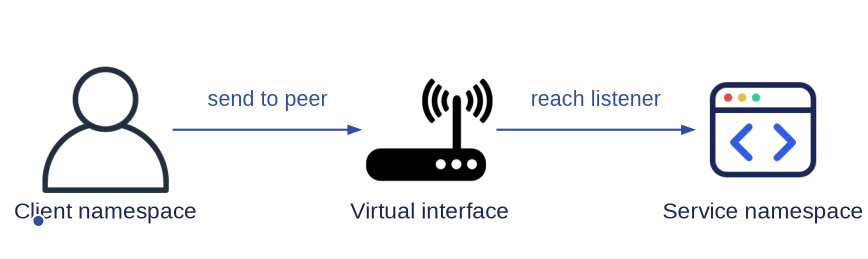
A service accepts local health checks, yet a probe issued from another workload fails. Compare the network namespace and the address each probe uses. Loopback identifies the caller’s own network stack. Inspect the listener, interface address and route from the failing caller’s perspective before concluding the service is down.
If the caller already reaches the target namespace, inspect address binding, route and service readiness next.
A listener visible from only one shell
Inside this chapter
- PID Namespace
- PID namespaces give a process different visible identifiers at nested levels. A host PID and container PID can refer to the same task. Record the observation boundary.
- Network Namespace
- A network namespace owns interfaces, routes and socket tables. A listening port in one namespace does not imply a listener on that port in another.
- Mount Namespace
- Mount namespaces isolate mount tables. Bind mounts and propagation settings determine which changes reach peers. Inspect the workload’s own view when a path appears missing.
- UTS and IPC Namespaces
- UTS isolates hostname-related identity. IPC isolates selected System V objects and POSIX message queues. An apparent name collision can disappear when inspected in the correct namespace.
- User Namespace and rootless containers
- User namespaces map identifiers into other namespaces. A process that sees UID 0 internally can have a limited external identity. Interpret ownership and capability checks in context.
- Cgroup Namespace
- A cgroup namespace virtualizes the visible cgroup root. Resource control still comes from actual hierarchy and controllers. A shorter visible path does not increase available resources.
- Time Namespace
- Time namespaces can offset selected monotonic and boot-time clocks. They do not virtualize every clock. Compare measurements within the same clock domain.
How it works
Step through the idea, or press Play.
Start a network namespace. A new network view has its own interface and routing state.
Understand it
Worked incident
A listener visible from only one shell
| Observation | Successful probes per 10 (probes) | Interpretation |
|---|---|---|
| Baseline | 10 | The probe runs beside the service and reaches its listener. |
| Incident | 0 | The same loopback address refers to a different network namespace. |
| After intervention | 10 | Use a reachable service address and verify it from the original caller’s namespace. |
Choose the next investigation
Summary
The whole topic in one minute.
Each network namespace has its own loopback device and socket table. Reachability depends on where the request originates.
If the caller already reaches the target namespace, inspect address binding, route and service readiness next.