
Design Ticketmaster
hard 55 minSell numbered seats to far more people than there are seats.
Grow the design
Start with the smallest system that works. Change it only when something breaks.
Seven versions
Version 1: One service, one database
Forced by: The features: see seats and buy one.
- What changes
- A seat is sold with one conditional update, after a card call.
- What it costs
- Almost nothing. The unique rule already prevents an oversell.
- What breaks next
- Two people type card details for one seat, and the loser learns it last.
Say: It is already correct. It is only unkind.
Architecture
High-level design
The whole system
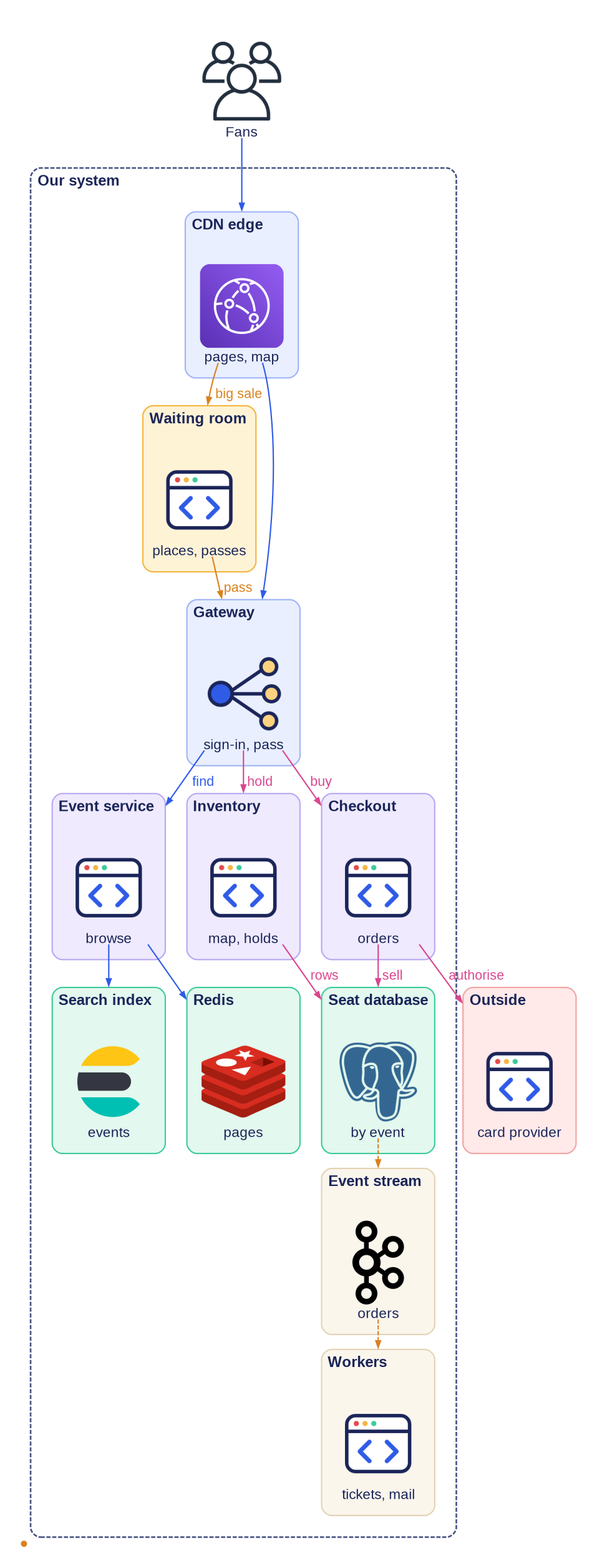
One request through the system
- 1
Client
Map and countdown in the browser or app; bought tickets readable without a network.
- 2
Edge
Static files, waiting page, attack protection, first rate limits, nearest region.
- 3
Balancer and gateway
TLS, health checks, sign-in, the pass, limits, routing, a circuit breaker for each service behind it.
- 4
Event service
Search with filters and places, event pages, 60-second cache for results.
- 5
Inventory
Maps and holds. Reads for the map come from a published picture, decisions from rows.
- 6
Waiting room
Lobby, places, public number, passes.
- 7
Checkout and payment
The states of an order. Only the payment service talks to the provider, and card numbers never reach us.
- 8
Workers
Tickets, e-mail and push, capture, refunds, analytics, risk review.
The purchase alone
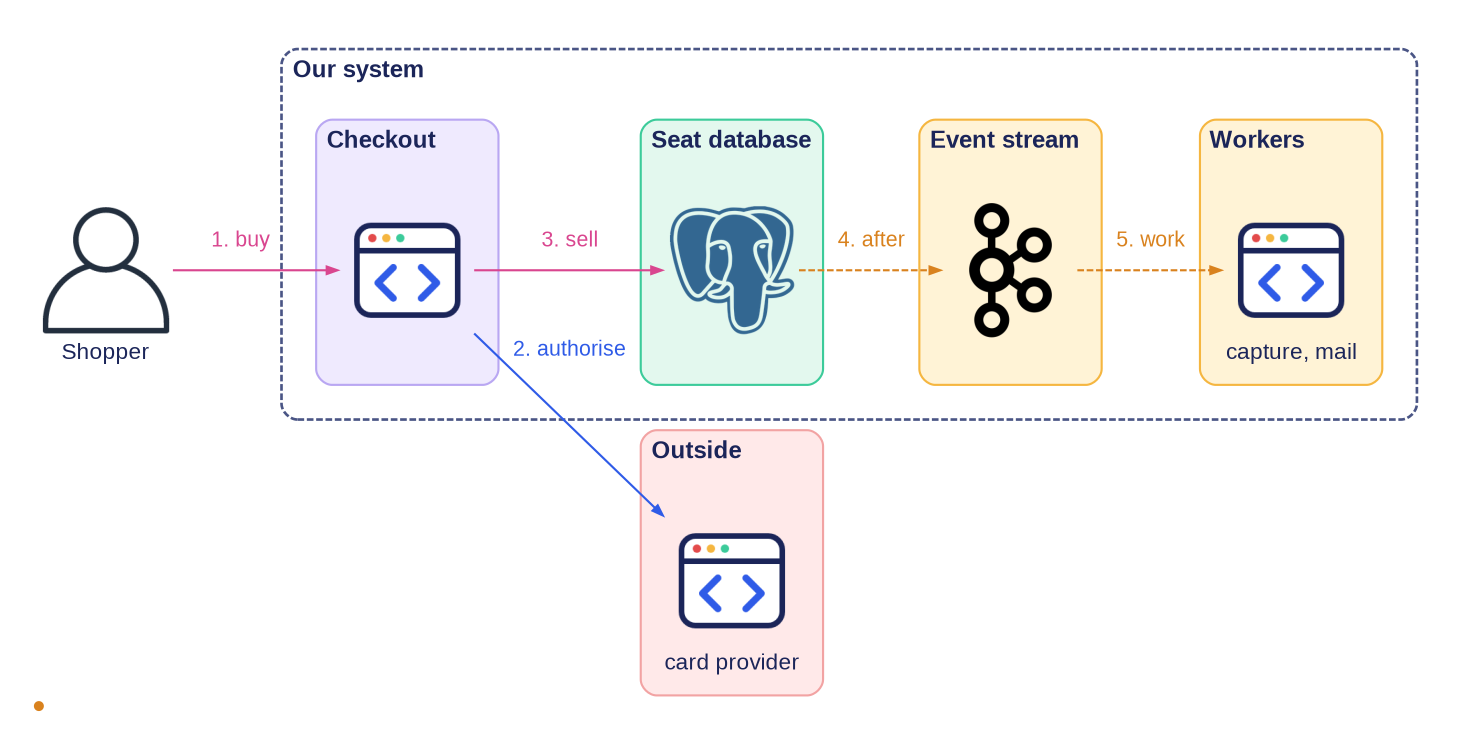
A seat's life
Flow 1: hold
Flow 2: buy
Flow 3: wait